


Exercise for Mental Health: Programs for Students, Seniors, and Busy Professionals
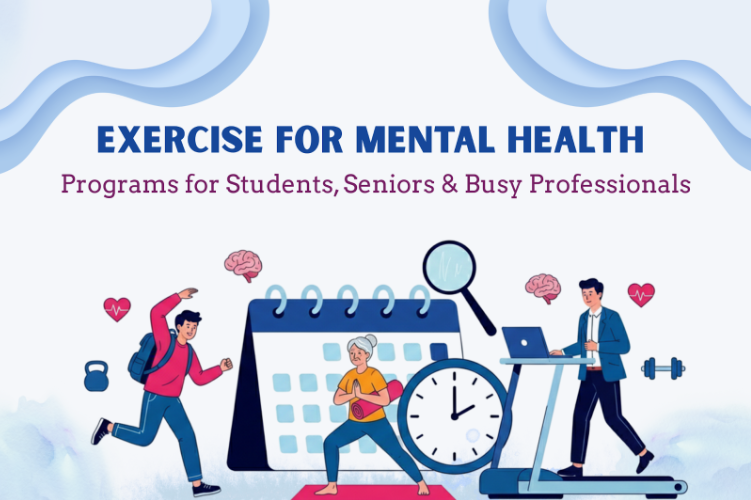
Exercise for Mental Health: Programs for Students, Seniors, and Busy Professionals
We often associate mental health with therapy, mindfulness, or medication, while physical activity is rarely considered a central mental health tool. There are decades of psychological and scientific research backing the idea that exercise plays a pivotal role in supporting emotional well-being.
Today, stress, anxiety, emotional exhaustion, low mood, and other mental health concerns are growing increasingly common. On the one hand, students face academic pressure and uncertainty about the future; on the other hand, busy professionals struggle with chronic stress, burnout, and limited time for self-care. It’s not just them; seniors also experience loneliness, mood changes, or cognitive decline. Even though their age groups and experiences vary, they share something in common, and that is prolonged stress combined with limited opportunities for emotional regulation.
Physical activity or exercise, from a mental health support perspective, is not about appearance, weight loss, or being athletic. It functions as a regulatory tool that helps the mind and body manage stress, mood, attention, and emotional balance. Multiple studies have consistently indicated that regular physical activity is associated with lower symptoms of depression and anxiety, improved stress management, and better overall psychological well-being.
How Does Exercise Impact Mental Health? What Does The Science Show?
Neurobiological Pathways
Neurotransmitters (chemical messengers in the brain that carry messages from one nerve cell to another), such as serotonin, dopamine, and norepinephrine, and their regulation are associated with physical activity, which influences mood, motivation, and attention. This also helps in explaining why regular exercise is linked to reductions in depressive and anxiety symptoms. In some groups, these effects are similar to low-intensity mental health interventions like guided self-help or brief cognitive-behavioural strategies.
It is also associated with increased levels of BDNF, i.e., brain-derived neurotrophic factor, a protein involved in learning, memory, and emotional regulation.
In addition, regular physical activity helps regulate the HPA axis (hypothalamic pituitary adrenal), which is the body’s stress response system. In the long term, this improves cortisol regulation and reduces the long-term impact of chronic stress.
Psychological Mechanisms
Self-efficacy, a key psychological concept, is explained by the belief that one can cope effectively with challenges. Individuals who experience anxiety and low mood also often score low on self-esteem. Completing even small amounts of physical activity can boost an individual's confidence, fostering their self-esteem. Exercise also helps people get active again, which is exactly what therapists encourage in mental health problems like depression to improve mood.
Rumination, unhelpful repetitive thinking, and constant worry are also reported to be low in individuals who practice physical activity.
Exercise as a Mental Health Tool (Not a Replacement)
It's crucial to understand that exercise is not a replacement for therapy, medication, or other mental health interventions. However, it is an effective complement to mental health care, particularly for mild to moderate depression, anxiety, and chronic stress. While other psychological methods like psychotherapy usually rely heavily on verbal processing, communication, or deep reflection, which can sometimes be overwhelming, especially when you’re feeling emotionally drained.
How Much Exercise Can Help with Mental Health?
After understanding the benefits of exercise, individuals may misconstrue that they may have to exercise a lot in order for it to have some positive effect on their mental health. However, these benefits can be gained without doing large or rigorous amounts of exercise. Research shows that some of the biggest gains occur when people move from no activity to even small amounts. In fact, consistency matters more than intensity, and enjoyable, manageable activities are more sustainable.
For example, going for a short walk regularly can be more beneficial than an intense routine, like intense cardio or weight lifting, which can feel overwhelming, leading one to quickly abandon it.
Exercise Programs For Different Groups
Students: Supporting Stress, Anxiety, and Focus
Academic pressure, the pressure to fit in, career anxiety, and uncertainty about the future are common worries that students experience. Research supports that physically active students report lower anxiety and depressive symptoms, along with improved concentration and better stress management.
A practical routine for students may look something like this:
- Activities: brisk walking, cycling, light jogging, dancing, or recreational sports
- Duration: 20–30 minutes
- Frequency: 3–5 days per week
Instead of thinking about exercise as an extra task on your to-do list, try integrating movement into your daily routine. Even a 10–15 minute movement break between study sessions (such as stretching or a short walk) can help improve focus and break monotony. Group-based exercises or team sports may further support motivation and reduce isolation.
Seniors: Supporting Mood, Independence, and Cognitive Health
Seniors may experience low mood, loneliness, reduced independence, or concerns about cognitive decline. Retirement, health changes, or other life transitions can add to these pre-existing concerns of ageing. Research shows that regular physical activity supports emotional well-being, cognitive functioning, and quality of life in older adults. Exercise supports seniors by providing structure, maintaining confidence and independence, and reducing isolation, particularly when done in social settings.
An evidence-based routine for seniors may look something like this:
- Activities: walking, chair-based exercises, stretching, balance training, tai chi, or gentle yoga
- Duration: 20–40 minutes
- Frequency: 3–5 days per week
Busy Professionals: Managing Stress and Burnout
Busy professionals often experience chronic stress, emotional exhaustion, and blurred boundaries between work and personal life. Research consistently shows that physical activity reduces perceived stress and supports emotional recovery, even when work demands remain high.
A practical routine for professionals may look something like this:
- Activities: brisk walking, cycling, home-based workouts, short strength routines, or stretching and yoga
- Duration: 15–30 minutes
- Frequency: 3–5 days per week
Like students, professionals often benefit from integrating movement into existing routines — walking during calls, taking short breaks between meetings, or using exercise as a transition after work to mentally “switch off.”
A Psychologist’s Perspective: Toward Sustainable Mental Health
Common obstacles to exercising regularly may be a lack of time, setting unrealistic expectations, fatigue, low motivation, or an ‘all or nothing’ thinking. Instead, think of exercise as any sort of movement and integrate it into your already existing daily routine. What matters is that you do any form of exercise regularly and consistently.
Maybe try yoga right after you brush your teeth, or walk after lunch or during your daily commute, practice a sport the next time you hang out with your friends (badminton, volleyball, etc), it could be any sort of movement. Keep it simple and stay consistent.
image credit : freepik

7 Myths About Exercise and Mental Health - Busted
How to Build an Exercise Habit That Sticks for Your Mental Health